Milton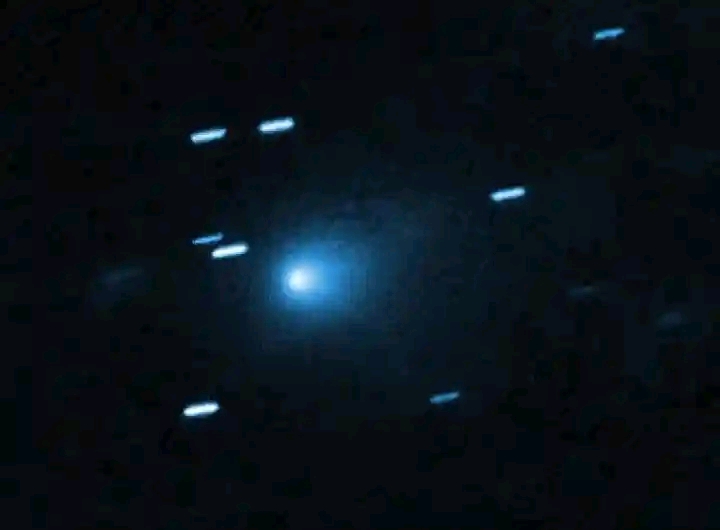
December 19, an extraordinary visitor from beyond our solar system will make its closest approach to Earth. Known as 3I/ATLAS, this object is only the third confirmed interstellar comet ever detected—after ‘Oumuamua and Borisov.
It did not form around our Sun. It was born around another star, in another planetary system, and has been drifting through interstellar space for millions, perhaps billions, of years before briefly crossing our cosmic neighborhood.
Discovered six months ago, 3I/ATLAS immediately puzzled astronomers. Its trajectory clearly shows it is not bound to the Sun’s gravity, confirming its interstellar origin. But beyond that, many questions remain unanswered. Is it a typical comet rich in ice, or something far more unusual? Why does its activity behave differently from comets we know? And what does its composition reveal about the conditions around distant stars where it was formed?
Despite months of observations using ground-based telescopes and space observatories, 3I/ATLAS continues to defy easy explanation. Each new image adds detail—but also deepens the mystery.
Tomorrow’s close pass offers one of our best chances to study this ancient traveler before it continues its silent journey back into the darkness between the stars. For a brief moment, the universe is letting us examine a fragment of another solar system—up close, yet still full of secrets.